As you know, memory, in its acquaintance with the past, is the main tool for the élite in power to set up a “narrative of the present” and pave the way for an “image of the future”. Since the present is just happening in the same time you say and the future is not belonging to everyday life, the past – and, as a consequence, the memory of the past – is the basic additive to establish a narrative, to form a collective memory and to set up a prevalent, egemonic, ideology to define the profile of a community and justify a kind of power.
On the other hand, the social memory, in the way it dialogues with the cultural memories of a people and distinguishes itself from the different, peculiar and specific personal memories of a group, is a very important path to establish the collective memory and a decisive discourse to forge a national memory, which is at the beginning of the «common sense of a nation». In this way, you can also afford two different approaches to the issue of memory: as a cultural environment binding people together, establishing a community; and as a political instrument for national ideology, legitimizing a power scheme.
This is true in any case; specifically true in the case of the Balkans, particularly in Kosovo, where the cultural ground and a common memory of Albanian people is based on the Kanun (the Code issued by the despot Lekë Dukagjini in the 15th century and coming from a tradition of social norms), especially for the transfer of its learning from generation to generation; while a significant depository of memories for Serbian people is relying onto the heritage of the Dušan Code (the Code by Tsar Dušan from the 14th century, which is a base of Serbian statehood and is depicted as the first Serbian Constitution).
Kanun is based on the “rule of honor” which is placed at the base of the ancestral order, where blood is considered only for men’s issues; according with the tradition, you’ve to go straight – face to face – with your competitor and clearly say the reasons why you’re going to take the blood from him: you’ve to say the reasons why you’re getting involved into the feud. Kanun is sometimes just misused and manipulated not for positive but for negative, to justify a crime and not to establish a – even bloody – kind of justice.
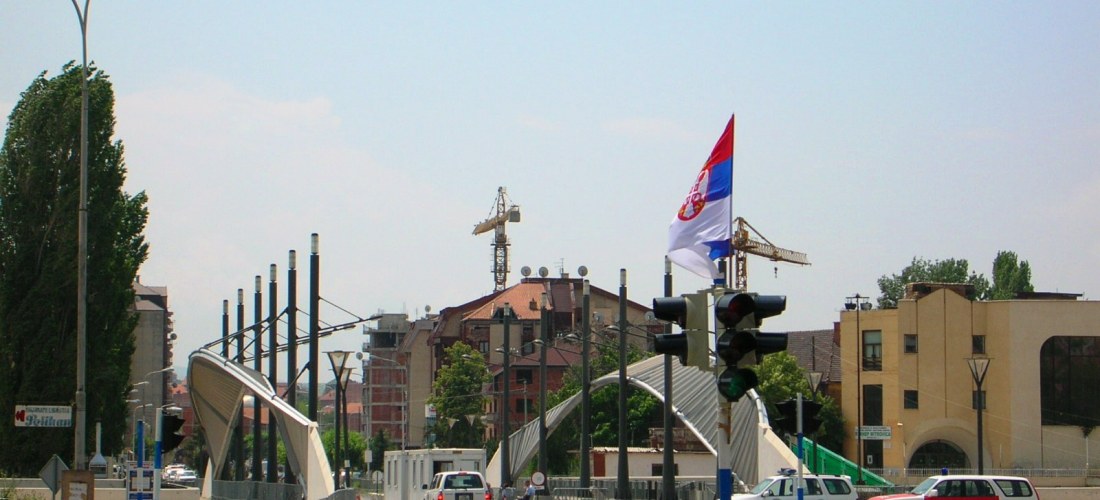
Mitrovica is one of the real outposts, a symbolic centre, of Kosovo conflict, because it was one of the most important workers’ and industrial towns in Yugoslavia, and it’s divided by the bridge over the Ibar river in two sectors with two ethnicities, a Serb majority North (Kosovska Mitrovica) and an Albanian majority South (Mitrovicë). A part from this, certain neighborhoods are sensitive for their social composition and conflict consequences, like Bosniak Mahala, Kodra Minatorëve or Mikronaselije and Three Towers, in the North.
They are places of «conflict inside the conflict», since the proximity reasons of the conflict are mixing with the prevalent ones and the violence affection of the war consequences of 1999 is kept alive by the micro-sphere of violence and the survival of an everyday memory of the past. Doing a project survey in the Three Towers, people said the situation is usually calm and, at the same time, tense, especially because of the difficult economic situation, the lack in jobs and opportunities, the troubles in moving from place to place, even inside Kosovo, and the little communication across communities, especially with Serbs.
According with the institutional arrangement of the area, belonging to the Northern Sector, it is not having any Kosovo institution, it is ruled by Serb Municipality, alongside with Serbian institutions, which are supported and financed by Serbia and will enter the Community of Serb Municipalities. It’s a complex situation, also because Albanian people there felt scared, while Serbs and Roma people in other places or villages in Kosovo are constantly exposed to injuries, threats and violence by radical fringes and extremists.
Nowadays, it’s quite evident the survival of a “chain of violence”, generally latent, passing through different levels, structural, cultural and, sometimes, direct violence. It is a challenge to face through social and cultural tools and the positive topics and meaning established and vehiculated by cultural memories and cultural heritage. The cultural deposits of collective memories can constitute a ground for the detection of common traits, capable of feeding, with the definition of identity, a main path for communication.
It’s time to single out links, looking for practical common traces in shared living communities. Coming from the past, exploring the collective memories of the peoples; promoting reciprocity and understanding, especially starting from the economic and social development and the legacy and cultural heritage, with the idea of a new base for common life, is a major path for a positive peace, cooperation and coexistence.
 civilpeacecorpskosovo