The Yugoslav period, also for Kosovo, and Mitrovica especially, was totally different from nowadays, since in the Fifties, for example, also teachers coming from Russia went to teach in Serbian schools and gave lessons on many different subjects and there was a very wide openness to international situation and world cultures; also, in the following times, teachers from other countries also arrived, and you can imagine how the cultural situation and the educational environment were rich and completely different from nowadays.
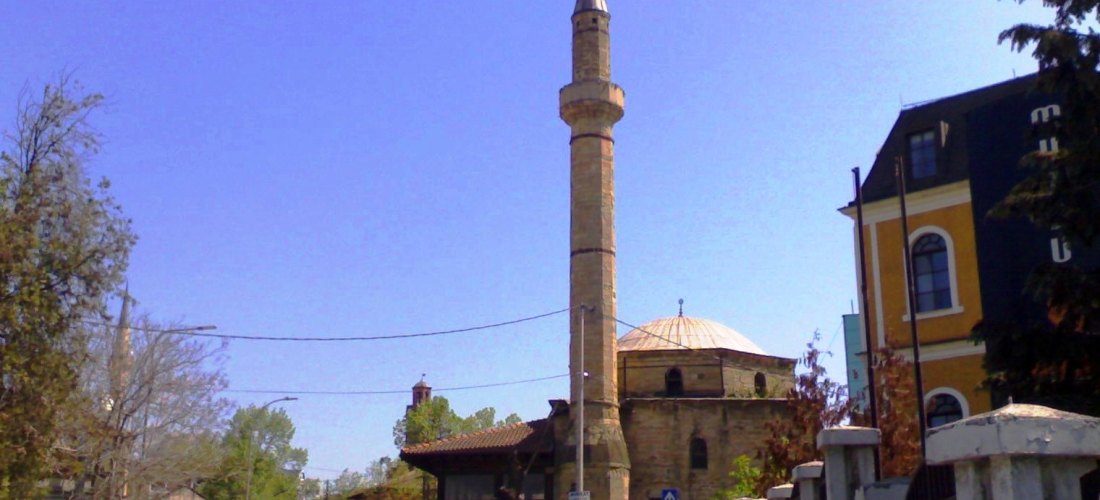
Now, you don’t have many inter-ethnic and inter-cultural areas in Kosovo and, in a very meaningful place like Mitrovica, where ethnic communities don’t live together but are side by side in a “common” environment, you can find Bosniak Mahala, which is a very sensitive place for inter-cultural and socio-economic exchange. You can find Serbian speaking owners or businessmen with Albanian customers and, in the same time, Albanian speaking ones who have Serbian customers, so they have a lot of exchanges on different levels.
You have the case of a bakery, well known in the entire Mitrovica, which, in Ramadan time, uses to produce a traditional bread, which is asked also by Serbian speaking customers, because it’s very characteristic in that time of the year; and you also have some Serbian friends who use to buy bread or stuff like that. It’s the same for some kinds of traditional coffee-shops where, also for the traditional beverages they serve, mostly the traditional liquor very well known as “rakija”, you can find Serbian friends, close to each other.
In a sociological way, you can face a «human rights based behaviour» in Bosniak Mahala. As you see, the conditions for a rehabilitation, re-composition and reconciliation, in Mitrovica and generally in Kosovo, are mostly based on socio-economic development and cross-cultural exchange. Also this acquaintance with relationship and friendship among ethnicities and communities is based on the ordinary exchanges in everyday life and on a sort of “unwritten rule”: they somehow know where to step and where not.
If you have, in Bosniak Mahala, houses after houses, anyone is very close to each other and, in some cases, have a long time acquaintance with the “other”. The situation is different elsewhere, since in Kodra Minatorëve/Mikronaselije you have just a small group of Albanian houses quite completely surrounded by Serbian houses, while in “Three Towers” the ethnic composition is at “floor-based” level, so you have one flat or one floor with Albanian families and three, four, five more flats or three, four, five more floors with Serbs.
Generally speaking, Kosovo is a possible base to explore a formula for co-existence. You don’t have any lamp genius to ideate the perfect formula; but anyone can find a way to live together, and this original way is based, essentially, on the «reciprocity of needs»: as one needs the other to buy something or to live closely as “neighbour”, the other needs you as well to manage a business, finding shared solutions to common problems.
You can also imagine or figure out how the inter-communitarian situation can improve, or just manage an issue or improve a project. For certain extent, Bosniak Mahala is a sort of customary free zone: Albanian businessmen open their business according to Kosovo regulation and pay taxes to Albanian office, Serbian businessmen open their business according to Serbian regulation and pay taxes to Serbian Government.
They need to have this kind of benefit from that area, in terms of relax and contact, safeness and good relations, based on social, familiar and economic reasons. Such reasons are based on the very fundamental issues and topics of the everyday life.
 civilpeacecorpskosovo