Memory: Concepts and Grounds

Most of the literature emphasizes the correlation between location (topography), human activities (in a social, relational or communitarian way) and related meanings (cultural, moral or ideological ones) towards a more meaningful “sense” of space. The model space by Edward Relph (1976), outlined in his fundamental Place and Placelessness, provides keys to address the notion of space (physically and figuratively) from the point of view of the relations you can engage and the (social and moral) meanings you can single out.

A human need of any nature, in fact, exists in the extent to which it is associated to a place, which is a physical or a conceptual space, and connected to a texture of a social relations, which is a kind of common ground for actions and interactions. If we choose to ignore this need and allow the forces of displacement to continue undisturbed, then the future can not be more than an environment where places (presence of places, sense of places, memory of places) will not have any importance and relations will be downgraded up to make human meanings, feelings, and relations disappearing.

If we choose to transcend displacement, this can generate a potential for the development of a positive environment (geo-human) where the places “are for” people, representing and hosting a variety of human experiences and cultures, relationships and sociality. Which one, among these possibilities, or even if there are further ones more, can not be determined with certainty, but one thing is clear: if the world we live has a displaced geography, empty in places and experiences, or, instead of this, a human geography, full of significant places and meaningful links, the responsibility will be exclusively ours.

The lesson we can learn from this is especially a lesson for human security issue, for civilian defence and democracy topics: a place we can consider significant from the point of view of the human experiences and the human relations you can establish in, is also a secure and safe place, where the matrix of safety and control is no longer solely related to police stand and military check. This is a social achievement, if you think the topic in terms of civilian defence, human rights and, finally, peace work.

The European Parliament Recommendation B4-0791, issued in 1999, advices the Commission and the Council to set up a Civil Peace Corp and a Preliminary Feasibility Study for such a Civil Peace Corp (CPC) inside the European Foreign and Security Policy. The document recommends to activate a minimal flexible structure, in order to record, prepare and mobilize either NGO-based resources and institutional resources granted by Member States and to concur to their mutual coordination.

The CPC is conceived as a professional organization of European peace-oriented civil society, mostly inspired by non-violent vision, in charge of intervening after an expressed instance coming from local context-based civil actors, in the pre-conflict situation (prevision and prevention), in the on-going conflict situation (interposition and protection) and in the post-conflict case (unarmed and non-violent civilian peace-keeping and peace-building), with tasks such as violence prevention, mediation and social re-composition.

The European Parliament suggests a “standard composition” for a CPC made by:

  • a little group made by specialized people with different qualifications and full-time employed with tasks for management and continuity (a board to manage, intervene, evaluate, link and collect studies and reports),
  • a large group made by qualified people to send to missions one after another (like experts, volunteers and professionals, adequately prepared) for specific tasks, projects and missions, as professional peace operators.

The topics for an operational path addressed to CPC operators should be:

.   non-violent and constructive conflict management,
.   changes in the war and in the way to act the war in the history,
.   conflict analysis, conflict pre-assumptions and warnings analysis (war prevention),
.   history, contexts and circumstances about human rights and gross violations,
.   psycho-social aspects of discrimination, stereotypes and prejudices,
.   socio-anthropological aspects of “Majority/minority (M/m)” relations,
.   ways, methods and tools to change the “Majority/minority (M/m)” relations,
.   descriptions of experiences and activities of international Civil peace corps,
.   “conflict sensitive” economic cooperation and humanitarian relief in conflict areas,
.   project work for conflict management and peace-making approaches and actions.
Memory and Everyday Life

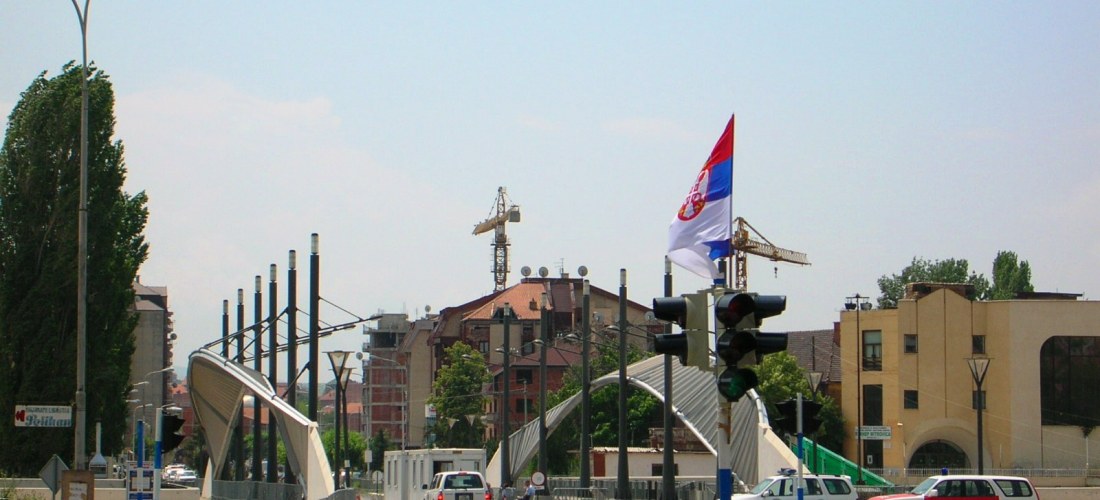
Since Kodra Minatorëve/Mikronaselije district in Mitrovica is like a “town in a town”, with the ethnic specificity to be an Albanian area in a Serbian city, it’s poorly connected with Albanian majority Central Kosovo, like Serbian enclaves in Central Kosovo are very hardly connected with Mitrovica. The public transportation serves the area by bus, but, if the situation is tense, the bus stops circulating. Close to the Main Bridge, the “Three Towers”, with a mixed ethnic composition, suffer the proximity of the contact area and the consequences of the time-by-time escalations of tension and violence in the region.

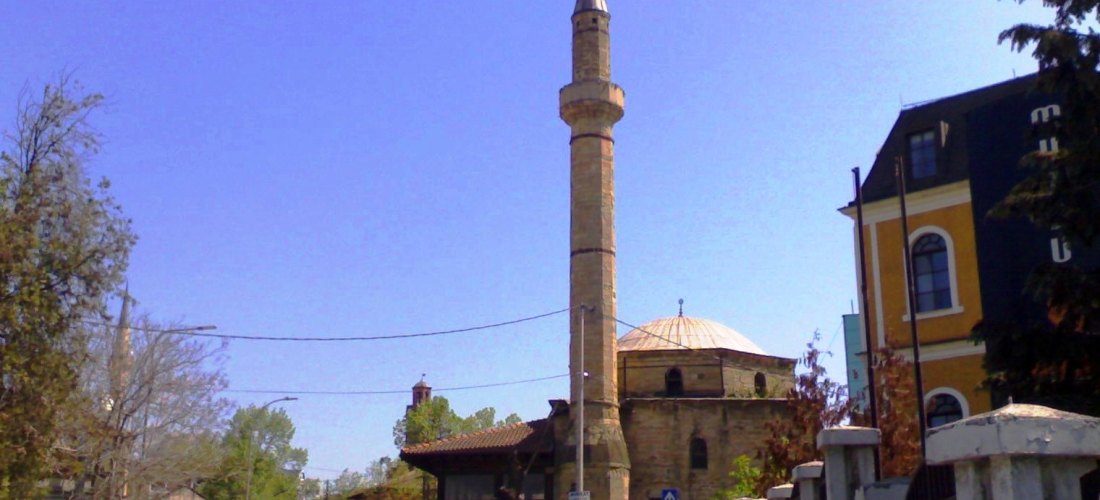
The situation in Bosniak Mahala is, for certain extent, different, and you can see what kind of variety is among different quarters in the post-conflict Mitrovica. People are not moving like they used to do, normally, in the past, and they are not easily going from place to place as you can imagine in a quiet situation, because one of the conflict consequences is that freedom of movement, inside and outside Kosovo, is limited. Even in such very difficult situation, Bosniak Mahala continues to be a peculiar environment and a multi-ethnic scenario, where sharings are going on and peace-oriented activities are being held.

The landscape in Northern Kosovo is made even more complicated by the presence of an “official” (from the Kosovo Albanian point of view) government which is the Kosovo Government, issued after the self-proclaimed independence, even if quite not present in the North, and a “parallel” (from the same Kosovo Albanian point of view) government, which is the Serbian Government, the official institutional authority according with the UNSC Resolution 1244 (1999) and for Serbian community, with its offices and functions, in each Northern District (Mitrovica, Zvečan, Leposavić and Zubin Potok).

In Bosniak Mahala, before March 17th, 2004, riots (pogroms), quite 80% of the population were Albanians while nowadays, after the Albanian extremists’ attacks against Serbian communities in Central Kosovo and the widespread climate of violence, anger and suspicion following it, but also for the consequences of the economic crisis, many Albanians just left that quarter and sold their properties, going South.

Bosniak Mahala, from such a point of view, is like a “Little Bosnia”, because you can find a Bosnian community, Serbs speaking Albanian, Albanians speaking Serbian, and, of course, Bosniaks, who are native Slavs, speaking Serbian in Bosnian dialect and believing Islam, and Roma groups. Threats by Albanian extremists continue against the Serbian people and the non-Albanian communities, and they are a major danger.

This is a link-place between the two major communities in Kosovo and an interesting place for inter-ethnic exchanges, that is like a “heritage” from the past, since, up to end 1970s, Mitrovica was one of the most diverse and mixed cities, not only in Kosovo, but in the entire Yugoslavia, with Serbs, Albanians, Turks, Bosniaks and Roma (or, better to say, Roma, Ashkalij and Egyptians, R.A.E.). This social diversity, especially between 1950s and 1970s, was one of the featuring benchmarks of Mitrovica.

Memory Today and Current Situation

The current situation, in Mitrovica, like in the whole Kosovo, is moving and changing, sometimes better and sometimes worse, time by time. Up to 2011 and 2012, people generally preferred not to go from South to North, the same on the reverse. Later on, in 2014 and 2015, fifteen years after the war, you can go walking, from the South, to the North, and many changes are affecting the Main Bridge (“Austerlitz Bridge”), in Mitrovica, since 2016. Since 2021, periodic escalations of tension and measures by the authorities in Pristina have returned the Main Bridge to a situation of violence and confrontation.

While trying to approach a social problem, especially a controversy issue, you have to identify which are the common things or the common issues that the problem and the people in that context have. You need to start from the things you know, in order to solve the problem or to allow the situation go better and better; and, in the same way, you have to identify the things you don’t know and the topics which are under way. Showing proximity, equiproximity with the culture of the place, respecting the uses and customs, respecting the sensitiveness and religions, is a sign of reciprocity in sociality. If you don’t harm pride and respect local moods, you can establish basic, while important, links.

After the war, 1999, and after the troubles, 2004, the situation became more and more problematic from the point of view of the inter-ethnic relations. The social environment is marked by lack in confidence, segregation and division. Sometimes, you can also see how much cultural boundaries, more than ethnic links, count, both sides. This is a matter for a different conflict perception, even if you’ve also to consider religious affection is really a major problem of nowadays Kosovo, irrespectively of the different ethnicities. You need to face different challenges and efforts, to solve problems in communication, interaction and behaviour among people from different ethnic backgrounds in the entire Kosovo.

As referred by Ida Orzechowska (2014), «Kosovo Albanian Islam is different from… Islam in other Balkan States. It was influenced by the Yugoslav ideas and values, evolved under both socialism and cosmopolitism and is deeply mixed with the Albanian culture, very different from the surrounding Slavic cultures in the region. Until the 1980s, religion in Kosovo was a private thing. Under pressure from the Slobodan Milošević regime, it transformed into a nation-building and freedom-fighting issue.

«Finally, after the 1999 war, and especially after the 2008 independence, Kosovo Albanian Islam once again became private and non-political. The evolution makes the Kosovo Islam very difficult to frame and control, just as – in Jeffrey Goldfarb’s words – the dismantling of the Soviet bloc was run by “the politics of small things” initiated in discussions around kitchen tables». The nation-building process of the “Newborn State” and recent influences from Islamic countries, led to a crescent role of Islam and a thinning of secularism.

First, you have to face the social needs of all the people living in the region and try to find a positive solution for everyone, taking into account all the different instances and points of view, since, when you mix different problems, you can find a constructice, transcending, answer, to satisfy all the sides and solve the problems for everybody. Finally, you have to properly address the real, substantial, people’s needs from each side and any ethnicity, to work for sustainability in life conditions and hope in the future for all the people living the place, combining equity and harmony, freedom and justice, and transforming the conflicts.

Memory from the Past to the Future

The Yugoslav period, also for Kosovo, and Mitrovica especially, was totally different from nowadays, since in the Fifties, for example, also teachers coming from Russia went to teach in Serbian schools and gave lessons on many different subjects and there was a very wide openness to international situation and world cultures; also, in the following times, teachers from other countries also arrived, and you can imagine how the cultural situation and the educational environment were rich and completely different from nowadays.

Now, you don’t have many inter-ethnic and inter-cultural areas in Kosovo and, in a very meaningful place like Mitrovica, where ethnic communities don’t live together but are side by side in a “common” environment, you can find Bosniak Mahala, which is a very sensitive place for inter-cultural and socio-economic exchange. You can find Serbian speaking owners or businessmen with Albanian customers and, in the same time, Albanian speaking ones who have Serbian customers, so they have a lot of exchanges on different levels.

You have the case of a bakery, well known in the entire Mitrovica, which, in Ramadan time, uses to produce a traditional bread, which is asked also by Serbian speaking customers, because it’s very characteristic in that time of the year; and you also have some Serbian friends who use to buy bread or stuff like that. It’s the same for some kinds of traditional coffee-shops where, also for the traditional beverages they serve, mostly the traditional liquor very well known as “rakija”, you can find Serbian friends, close to each other.

In a sociological way, you can face a «human rights based behaviour» in Bosniak Mahala. As you see, the conditions for a rehabilitation, re-composition and reconciliation, in Mitrovica and generally in Kosovo, are mostly based on socio-economic development and cross-cultural exchange. Also this acquaintance with relationship and friendship among ethnicities and communities is based on the ordinary exchanges in everyday life and on a sort of “unwritten rule”: they somehow know where to step and where not.

If you have, in Bosniak Mahala, houses after houses, anyone is very close to each other and, in some cases, have a long time acquaintance with the “other”. The situation is different elsewhere, since in Kodra Minatorëve/Mikronaselije you have just a small group of Albanian houses quite completely surrounded by Serbian houses, while in “Three Towers” the ethnic composition is at “floor-based” level, so you have one flat or one floor with Albanian families and three, four, five more flats or three, four, five more floors with Serbs.

Generally speaking, Kosovo is a possible base to explore a formula for co-existence. You don’t have any lamp genius to ideate the perfect formula; but anyone can find a way to live together, and this original way is based, essentially, on the «reciprocity of needs»: as one needs the other to buy something or to live closely as “neighbour”, the other needs you as well to manage a business, finding shared solutions to common problems.

You can also imagine or figure out how the inter-communitarian situation can improve, or just manage an issue or improve a project. For certain extent, Bosniak Mahala is a sort of customary free zone: Albanian businessmen open their business according to Kosovo regulation and pay taxes to Albanian office, Serbian businessmen open their business according to Serbian regulation and pay taxes to Serbian Government.

They need to have this kind of benefit from that area, in terms of relax and contact, safeness and good relations, based on social, familiar and economic reasons. Such reasons are based on the very fundamental issues and topics of the everyday life.

Memory as a path for Reconciliation

As you know, memory, in its acquaintance with the past, is the main tool for the élite in power to set up a “narrative of the present” and pave the way for an “image of the future”. Since the present is just happening in the same time you say and the future is not belonging to everyday life, the past – and, as a consequence, the memory of the past – is the basic additive to establish a narrative, to form a collective memory and to set up a prevalent, egemonic, ideology to define the profile of a community and justify a kind of power.

On the other hand, the social memory, in the way it dialogues with the cultural memories of a people and distinguishes itself from the different, peculiar and specific personal memories of a group, is a very important path to establish the collective memory and a decisive discourse to forge a national memory, which is at the beginning of the «common sense of a nation». In this way, you can also afford two different approaches to the issue of memory: as a cultural environment binding people together, establishing a community; and as a political instrument for national ideology, legitimizing a power scheme.

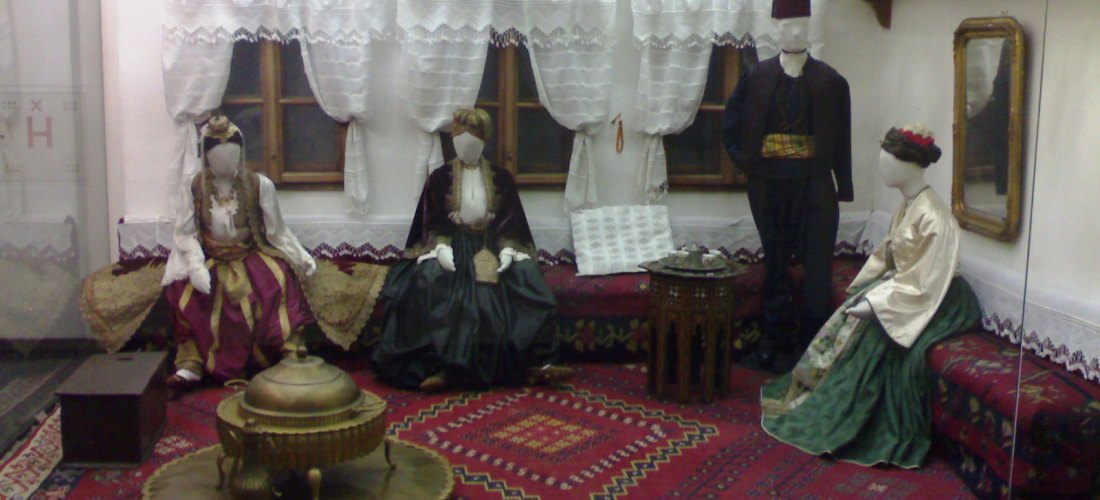
This is true in any case; specifically true in the case of the Balkans, particularly in Kosovo, where the cultural ground and a common memory of Albanian people is based on the Kanun (the Code issued by the despot Lekë Dukagjini in the 15th century and coming from a tradition of social norms), especially for the transfer of its learning from generation to generation; while a significant depository of memories for Serbian people is relying onto the heritage of the Dušan Code (the Code by Tsar Dušan from the 14th century, which is a base of Serbian statehood and is depicted as the first Serbian Constitution).

Kanun is based on the “rule of honor” which is placed at the base of the ancestral order, where blood is considered only for men’s issues; according with the tradition, you’ve to go straight – face to face – with your competitor and clearly say the reasons why you’re going to take the blood from him: you’ve to say the reasons why you’re getting involved into the feud. Kanun is sometimes just misused and manipulated not for positive but for negative, to justify a crime and not to establish a – even bloody – kind of justice.

Mitrovica is one of the real outposts, a symbolic centre, of Kosovo conflict, because it was one of the most important workers’ and industrial towns in Yugoslavia, and it’s divided by the bridge over the Ibar river in two sectors with two ethnicities, a Serb majority North (Kosovska Mitrovica) and an Albanian majority South (Mitrovicë). A part from this, certain neighborhoods are sensitive for their social composition and conflict consequences, like Bosniak Mahala, Kodra Minatorëve or Mikronaselije and Three Towers, in the North.

They are places of «conflict inside the conflict», since the proximity reasons of the conflict are mixing with the prevalent ones and the violence affection of the war consequences of 1999 is kept alive by the micro-sphere of violence and the survival of an everyday memory of the past. Doing a project survey in the Three Towers, people said the situation is usually calm and, at the same time, tense, especially because of the difficult economic situation, the lack in jobs and opportunities, the troubles in moving from place to place, even inside Kosovo, and the little communication across communities, especially with Serbs.

According with the institutional arrangement of the area, belonging to the Northern Sector, it is not having any Kosovo institution, it is ruled by Serb Municipality, alongside with Serbian institutions, which are supported and financed by Serbia and will enter the Community of Serb Municipalities. It’s a complex situation, also because Albanian people there felt scared, while Serbs and Roma people in other places or villages in Kosovo are constantly exposed to injuries, threats and violence by radical fringes and extremists.

Nowadays, it’s quite evident the survival of a “chain of violence”, generally latent, passing through different levels, structural, cultural and, sometimes, direct violence. It is a challenge to face through social and cultural tools and the positive topics and meaning established and vehiculated by cultural memories and cultural heritage. The cultural deposits of collective memories can constitute a ground for the detection of common traits, capable of feeding, with the definition of identity, a main path for communication.

It’s time to single out links, looking for practical common traces in shared living communities. Coming from the past, exploring the collective memories of the peoples; promoting reciprocity and understanding, especially starting from the economic and social development and the legacy and cultural heritage, with the idea of a new base for common life, is a major path for a positive peace, cooperation and coexistence.