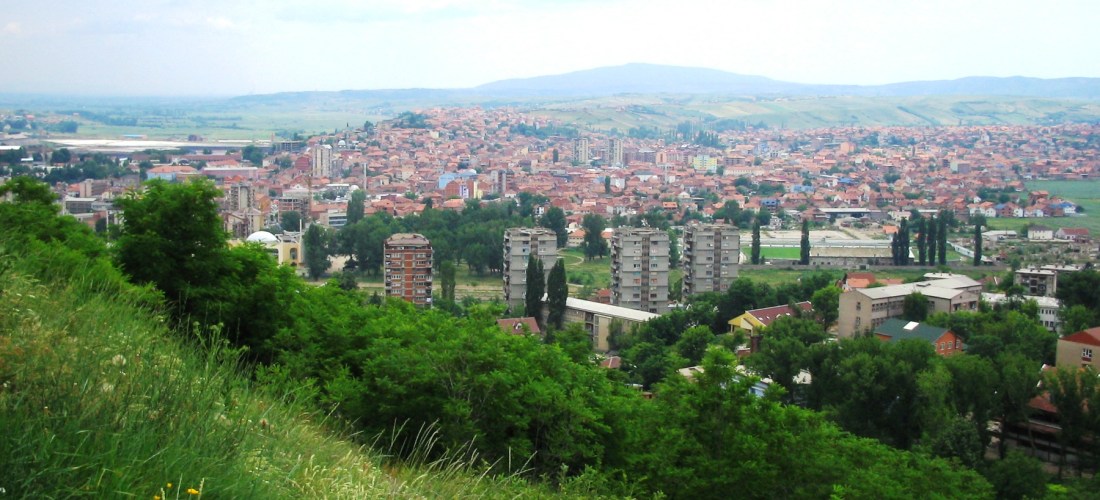
After the 1998-1999 war and the 1999 NATO aggression, Mitrovica is geographically and ethnically divided into two parts: the Northern part, where majority of the population are Serbs, and they do not accept Kosovo “State” institutions and are claiming for their authonomy, living like a sort of «parallel life» in the administrative way; and the Southern part, which is also part of the institutional framework of Kosovo, where majority of the population are ethnically Albanians and also suffer for the division of the region.
This division, being a geographical, cultural and social one and portrayed by the violence of conflict and the ingerence of power, is also a division in minds, visions and perceptions, since each community, in the last years, has been developed inside and not outside. For this, they have been rather blocked and barricaded from outer impacts, without knowing what has been really happening fifty meters across the river or across the Bridge, just outside the respective communities, lacking in the possibility to coexist and share and to imagine and experiment alternative roads to progress, social development, and democracy.
Virtually, the two communities are exchanging and sharing ideas, thoughts, values, but not eventually in Mitrovica: they have sometimes to go to Rome, Vienna, Bruxelles, to discuss about themselves, but not in the city and in the place where they are living. That is more and more feeding mistrust and the violent conflict rather than confidence and helping the pro-active peace resolution and reconciliation, with a constructive approach.
As stated by Johan Galtung, talking about Balkans: «Everybody must be represented; everybody must feel at home; the benefits must be reasonably mutual and equal. Educators can make traumas and glories of all nations a shared property; for empathy, for harmony. Historians can bring perpetrators and victims closer to each other by producing histories acceptable to both. Politicians can become more creative and find new conflict solutions».
Kosovo communities desire, basically, the same, to live together in a peace environment and in a better way, than the one they actually live, with more opportunities in job, wealth and well-being, but the ranked politics and the nationalistic leaders feed separation and division. Talking with people, facing the question how to do, how to handle the situation, how to live together, the problem is to overcome – find a way to do – the actual situation.
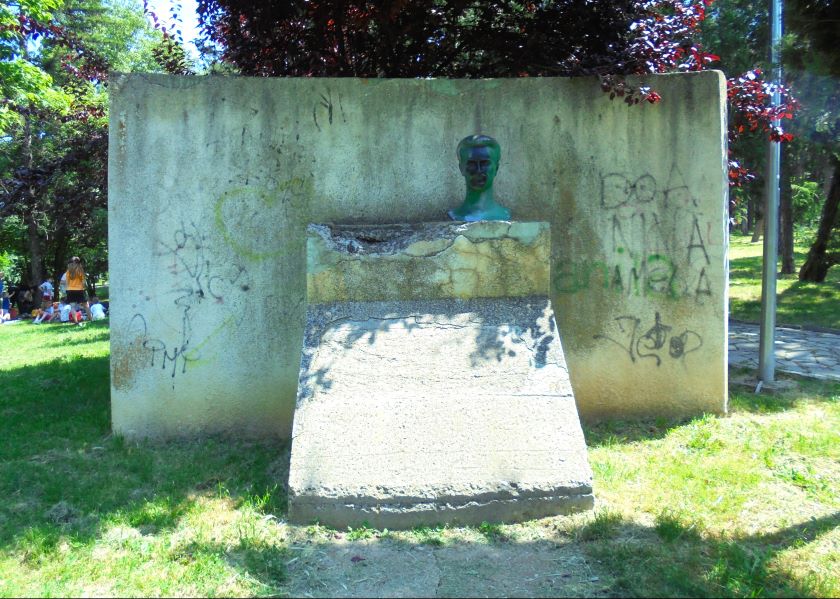 Former “Boro and Ramiz Monument” (Boro Vukmirovic and Ramiz Sadiku), Prishtina
The cultural dimension is at the heart of peace-building processes by being at once part of the problem and the solution. This is a task and a challenge for the «culture-oriented peace-building». As Michelle LeBaron has put it: «Culture is an essential part of conflict and conflict resolution. Cultures are like underground rivers that run through our lives, giving us messages shaping perceptions … and ideas of self and the other». It’s like you desire to look for a better future and to live together and, in the same time, you are not allowed to do.
«Cultures are more than language, dress, and food customs. Cultural groups may share race, ethnicity, or nationality, but they also arise from cleavages of generation, socio-economic class, sexual orientation, ability and disability, political and religious affiliation, language, and gender. Two things are essential to remember about cultures: they are always changing, and they relate to the symbolic dimension of life. The symbolic dimension is the place where we are constantly making meaning and enacting our identities. Cultural messages from the groups we belong to give us information about what is meaningful or important, and who we are in the world and in relation to others – our identities».
 civilpeacecorpskosovo